
We hear it every single day at John’s Sweeper Service in downtown Dover.
“I’m tired of buying bags. I want a vacuum that I can just empty and keep going.”
On the surface, it makes perfect sense. Why spend $20 or $30 a year on paper or synthetic bags when you can just buy a machine with a plastic bin? It feels like a “set it and forget it” solution for your New Philadelphia or Sugarcreek home.
But as vacuum experts who have been tearing these machines apart for decades, we know the “no-bag” promise is often a financial trap.
Today, we are looking at the cost of bagless vs bagged vacuums and uncovering the hidden expenses—both to your wallet and your health—that big-box retailers don’t want you to see.
1. The Filter Replacement Math: The “Free” Bin Myth
The biggest misconception about bagless vacuums is that they are “maintenance-free.”
In a bagged vacuum, the bag itself acts as the primary filter. Every time you change the bag, you are giving your machine a brand-new set of “lungs.”
In a bagless vacuum, that plastic bin provides zero filtration. Instead, the machine relies on a series of dense, pleated filters to protect the motor from the dust you just sucked up. According to the Association of Home Appliance Manufacturers (AHAM), these filters must be maintained perfectly to ensure the motor doesn’t overheat.
The Cost Reality
Here is the secret: Those filters are expensive. While a year’s supply of high-quality SEBO or Miele bags might cost you $25, a single replacement HEPA filter for a popular bagless brand can cost $40 to $60.
If you aren’t replacing those filters every 6 months, you aren’t saving money—you are slowly suffocating your vacuum’s motor. When you consider the ultimate guide to vacuum bags, it becomes clear that the “disposable” nature of bags is actually a cost-saving feature for the motor.
2. The Physics of Suction: CFM vs. Static Pressure
To understand why bagless vacuums often feel “weak” after six months, we have to look at the physics of airflow. Suction is measured in two ways: Cubic Feet per Minute (CFM) and Water Lift (Static Pressure).
- CFM is how much air is moving through the machine.
- Static Pressure is the “pulling” power required to lift heavy grit out of the carpet base.
In a high-quality bagged vacuum, the airflow remains consistent until the bag is nearly 90% full because the surface area of the bag is massive.
In a bagless vacuum, the surface area of the filter is tiny. As soon as a fine layer of Dover dust coats that filter, the static pressure drops. The motor begins to work twice as hard to move half as much air. This is why many bagless users find themselves troubleshooting suction loss much more frequently than those with bagged machines.
3. The “Dust Cloud” Reality: A Hidden Health Cost
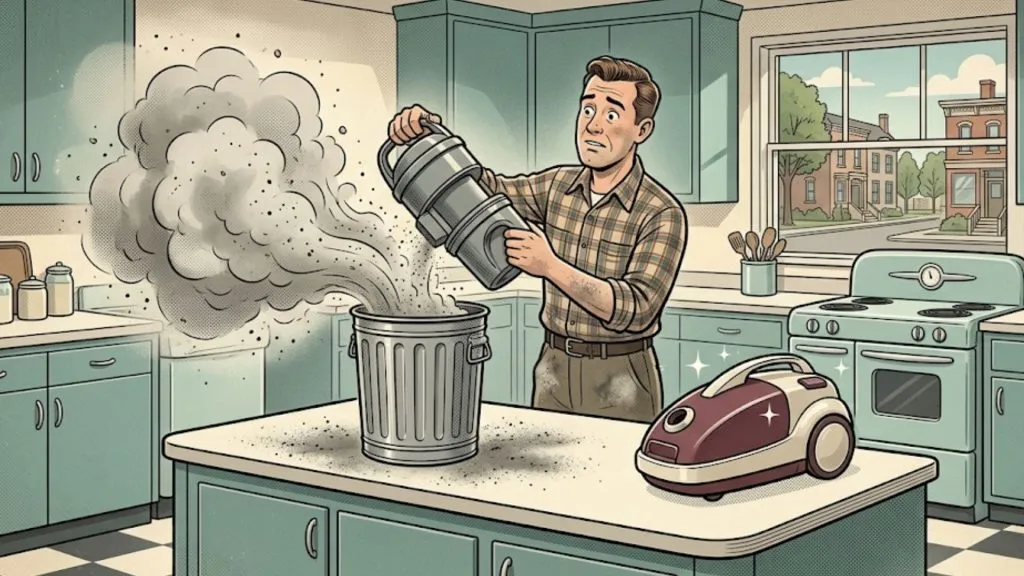
Have you ever emptied a bagless bin and seen a “poof” of gray dust float back into your face?
That cloud contains everything you just worked so hard to remove: pet dander, pollen, dust mite waste, and local T-County soil.
The Asthma and Allergy Foundation of America (AAFA) warns that emptying a bagless vacuum can cause a massive spike in indoor allergen levels. For neighbors in Dover struggling with seasonal allergies, this “dust dump” can trigger immediate respiratory distress.
With a sealed-system bagged vacuum, the dirt is sealed inside a multi-layer synthetic material. When you remove the bag, it automatically seals shut. You never touch, see, or breathe the dirt again.
4. Motor Longevity: Why Bagless Vacuums Die Faster
At our repair bench on 3rd Street, we see a clear trend: bagless vacuums have significantly shorter lifespans.
The reason is simple: Fine Dust Leakage. No matter how well you wash a bagless filter, microscopic particles eventually find their way into the motor bearings. Over time, this grit acts like sandpaper, grinding down the motor until it eventually seizes or smells like “burning electrical.”
In contrast, a bagged system provides a physical wall between the dirt and the engine. This is why we still see 30-year-old bagged machines in our Vintage Vacuum Museum that run like they were built yesterday. If your machine is already making strange noises, check our 5 signs that mean your motor is dying guide before it’s too late.
5. Comparing the Evidence: Bagged vs. Bagless
When our neighbors ask, “Are bagless vacuums worth it?” we show them this comparison. It helps visualize the hidden costs of cleaning over a five-year period.
| Feature | The “Disposable” Bagless | The “BIFL” Bagged (SEBO/Miele) |
| Initial Cost | $150 – $300 | $400 – $900 |
| Annual Supply Cost | $50+ (HEPA Filters) | $25 (High-Capacity Bags) |
| Dust Exposure | High (Every time you empty) | Zero (Sealed Bag System) |
| Suction Power | Drops as bin/filter fills | Stays consistent until bag is full |
| Expected Lifespan | 2 – 5 Years | 15 – 20 Years |
| Total 5-Year Cost | **$400+ (Including replacement)** | $525 (One-time investment) |
While the upfront price of a premium bagged machine is higher, the bagged vacuum benefits—including motor protection and air quality—save you hundreds of dollars in the long run.
6. The Maintenance Trap: “Washable” Doesn’t Mean “Permanent”
Many bagless brands market “washable” filters as a way to save money.
However, the Environmental Protection Agency (EPA) notes that improper drying of household items can lead to mold growth. If you put a “washable” filter back into your vacuum while it is even slightly damp, you are creating a dark, warm breeding ground for mold inside your machine.
Furthermore, washing a filter never gets it 100% clean. Every wash reduces the filter’s “breathability.” Eventually, the motor has to work twice as hard to pull air, leading to a burnt vacuum motor.
7. The Environmental Impact: Landfill Waste
In Tuscarawas County, we value our land. But the “disposable vacuum” cycle is a major contributor to local landfills.
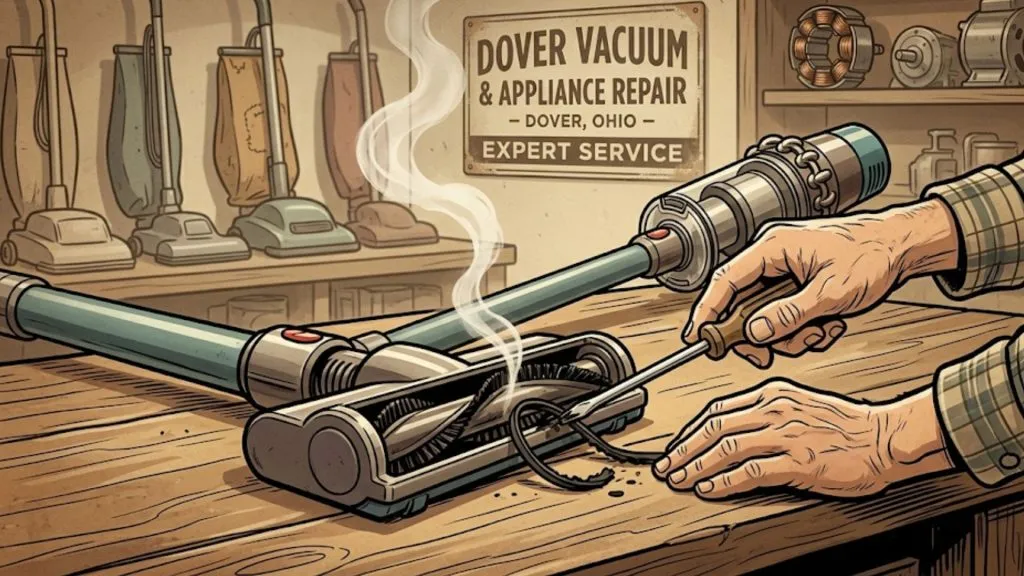
Because most bagless vacuums are made of thin, non-recyclable plastics and are held together with glue rather than screws, they cannot be repaired. When the motor fails on a $150 bagless unit, the entire machine goes into the trash.
A high-quality bagged machine like a SEBO or Miele is designed to be fully repairable. You can replace the motor, the cord, or the brush roll individually, keeping the machine in your home for 20 years instead of in the T-County landfill after two.
Why We Carry What We Do in Dover
We don’t just sell vacuums; we sell solutions that last. That is why our showroom features brands like SEBO and Riccar.
These manufacturers understand that a bag is the most efficient, hygienic, and cost-effective way to manage household waste.
- SEBO: Uses multi-layer “Aulticare” bags that filter 99.9% of dust before it even hits the motor.
- Miele: Features the “AirClean” system, which is widely considered the gold standard for allergy sufferers.
- Riccar: Built with metal components and high-capacity bags that hold significantly more than a standard plastic bin.
According to independent testing by Consumer Reports, bagged vacuums consistently outperform bagless models in both pet hair pickup and long-term suction retention.
Visit John’s Sweeper Service to See the Difference
If you are tired of the “bagless cycle”—buying a new plastic vacuum every few years because it lost suction—it’s time for a different approach.
Visit us in Downtown Dover. We will show you the “guts” of these machines. We’ll show you why the “convenience” of a bagless bin is actually a design flaw that costs you more money over time.
While you’re here, take a stroll through the museum. You’ll see that the most reliable machines in history all shared one thing: they used a bag to protect the motor.
Stop paying the hidden costs of bagless cleaning. Invest in a machine that protects your home and your health for decades.
John’s Sweeper Service & Vintage Vacuum Museum
- Call for Expert Advice: 330-343-4092
Related reading: Corded vs. Cordless Vacuums: A Head-to-Head Comparison