
If you have ever dragged a heavy, classic sweeper out of the hall closet in your Tuscarawas County home, you have probably asked yourself a very common question.
As you lugged that heavy metal machine across your New Philadelphia living room, you likely wondered: Are old vacuums better than new ones?
It is a question we hear almost every single day at John’s Sweeper Service in downtown Dover.
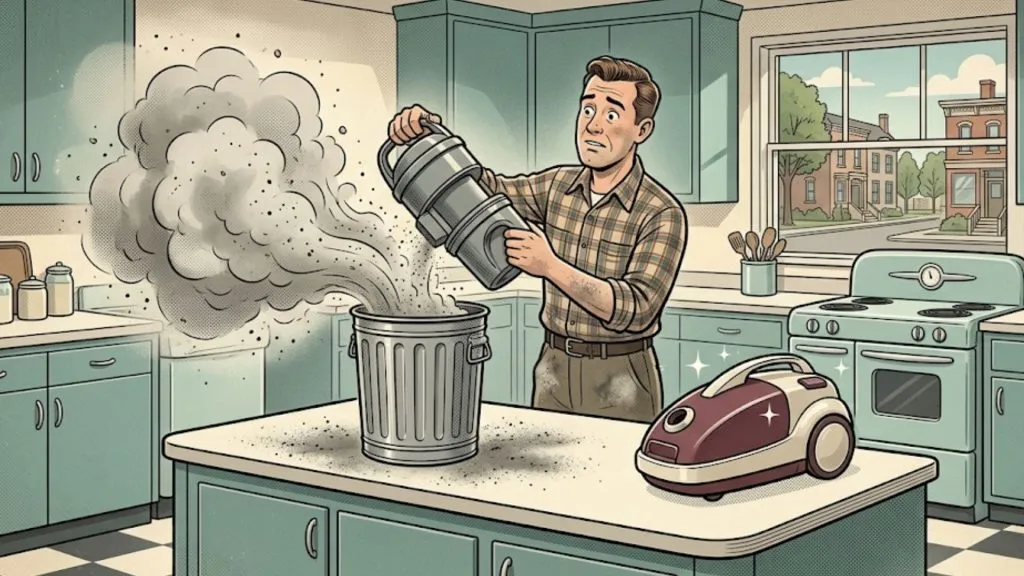
Customers come into our shop dragging a three-year-old, brightly colored plastic vacuum they bought at a big-box store. The plastic hinges are snapped, the motor is smoking, and the machine is completely destined for the landfill.
They look at the classic, indestructible machines sitting on the shelves of our museum and ask what happened to American manufacturing. Where did the quality go?
The truth is, the evolution of the vacuum cleaner tells a massive story about our culture, our economy, and how we value our household appliances.
Today, we are going to dive deep into the fascinating world of vintage vacuum quality and durability. We will explore why these classic machines were built so differently, why they weigh so much, and what lessons we can learn from them when shopping for a modern sweeper.
The Era of Built to Last Appliances
To understand vintage vacuums, you have to understand the mindset of the mid-20th-century consumer.
Following World War II, America entered an incredible manufacturing boom. However, the scars of the Great Depression were still very fresh in the minds of homeowners in towns like Strasburg and Sugarcreek.
When a family in the 1940s or 1950s purchased an appliance, it was considered a major, once-in-a-lifetime financial investment.
According to historians at The Henry Ford Museum, early household appliances were engineered with the strict expectation that they would serve a family for decades, and eventually be passed down to the next generation.
There was no concept of “planned obsolescence.” Manufacturers took immense pride in over-engineering their products.
They wanted their brand name to be synonymous with absolute, unbreakable reliability. If a company built a vacuum that broke after three years, their reputation in the community would be completely ruined.
This philosophy created the golden age of built to last appliances.

Metal Vacuums vs Plastic: The Core Difference
When we talk about vacuum cleaner construction over time, the most obvious and dramatic shift is the transition from metal to plastic.
If you look at the machines in our Dover showroom from the 1920s through the 1960s, you will see an ocean of spun steel, cast iron, and thick die-cast aluminum.
These heavy-duty metals were not just chosen for their shiny aesthetics. They were chosen because of the extreme physical forces that a vacuum cleaner must endure.
The Physics of the Sweeper
A vacuum cleaner is essentially a high-speed, vibrating turbine that is repeatedly smashed into baseboards, furniture legs, and doorframes.
When an electric motor spins at 15,000 revolutions per minute, it generates a massive amount of heat and intense physical vibration.
- The Metal Advantage: Metal housings act as massive heat sinks. They pull the destructive heat away from the electric motor, keeping it cool during an hour-long cleaning session. Furthermore, a heavy cast-aluminum chassis absorbs motor vibrations seamlessly without cracking or warping over time.
- The Plastic Problem: Modern, cheap plastic does exactly the opposite. Plastic acts as an insulator, trapping the intense heat inside the motor chamber. Over time, this constant heating and cooling causes cheap plastic to become incredibly brittle. Eventually, the intense vibrations of the motor will literally shatter the plastic housing from the inside out.
When you compare metal vacuums vs plastic vacuums, you are comparing a machine built to absorb physical punishment against a machine that actively degrades every time you turn it on.
Answering the Big Question: Why Old Vacuums Are Heavy
We often hear younger homeowners complain about the sheer physical weight of vintage machines.
“I remember using my grandmother’s sweeper,” they tell us. “It weighed a ton! Why are old vacuums heavy?”
The immense weight of a classic sweeper is not a design flaw. In fact, that weight is the absolute ultimate proof of its high quality.
The weight comes from three highly critical, long-lasting components:
1. The Motor Core
In a modern, disposable vacuum, the motor is tiny. It uses extremely thin, cheap wire to save manufacturing costs.
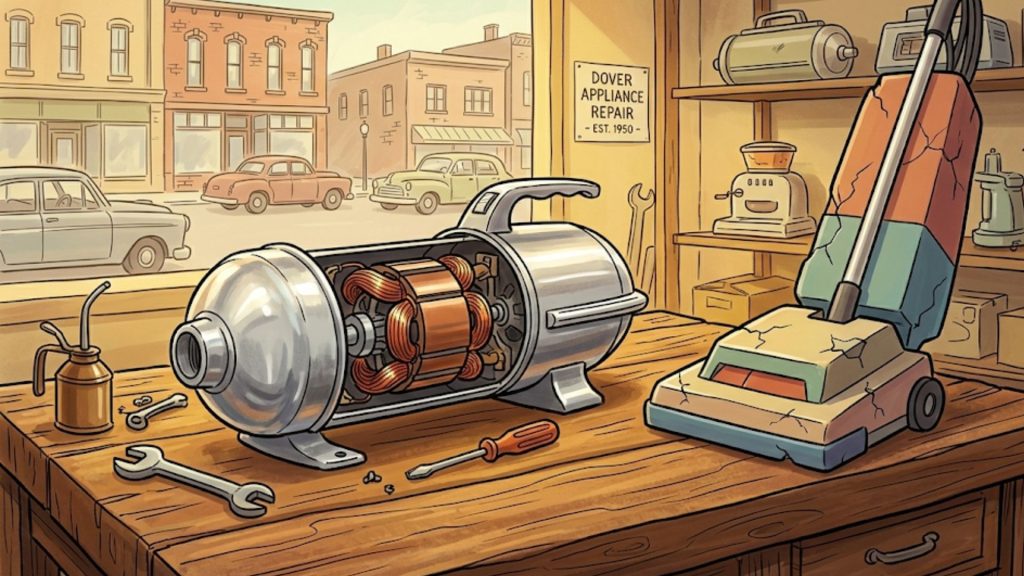
In a vintage machine, the motor is massive. It is tightly hand-wound with thick, pure copper wire. This heavy copper allows the motor to run for hours without ever overheating or burning out. Copper is incredibly heavy, but it is the gold standard for electrical conductivity and longevity.
2. The Fan Blade
When your vacuum sucks up a penny or a heavy paperclip, that object travels at high speeds directly into the suction fan.
Vintage machines used thick, cast-metal fan blades. If a metal fan hits a penny, it just makes a loud pinging noise and keeps right on spinning. Modern vacuums use cheap, lightweight plastic fans. If a plastic fan hits a penny, the fan instantly shatters into a dozen pieces, destroying the machine.
3. The Agitator (Brush Roll)
The piece that beats your carpet to lift the dirt is called the brush roll.
In classic machines, this part was made of solid, heavy hardwood or thick steel. This weight provided incredible momentum. It allowed the stiff bristles to physically beat the heavy dirt out of your carpet fibers. Today’s hollow, lightweight plastic brush rolls simply lack the mass required to deep-clean a heavy rug.
So, when you ask why old vacuums are heavy, the answer is simple: they are filled with the heavy, high-quality materials required to do the job perfectly for fifty years.
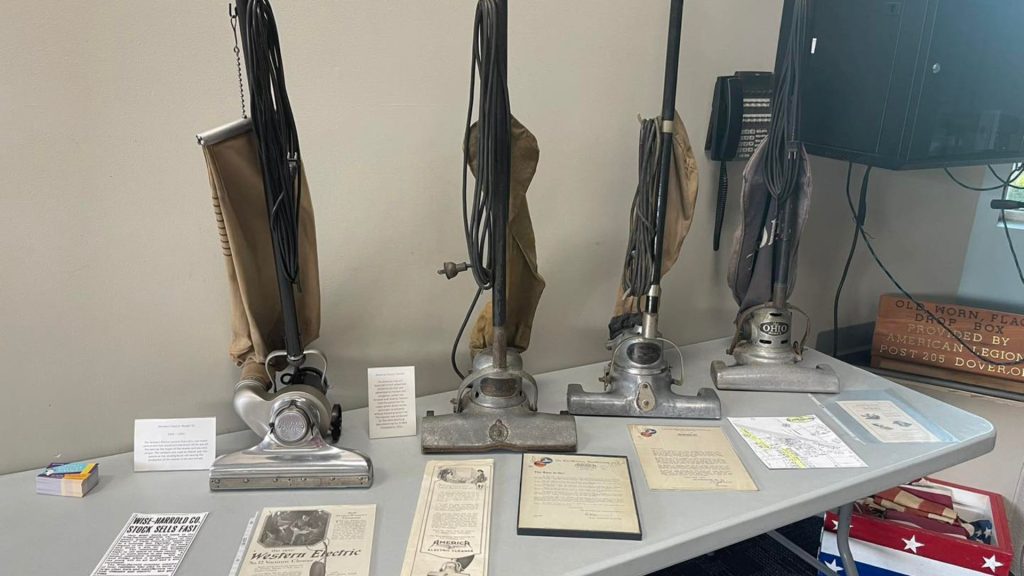
Kirby Vacuum History and Quality
You cannot have a conversation about American vacuum history without talking about the undisputed king of durability: The Kirby.
For generations, the Kirby vacuum has been a legendary fixture in Ohio homes. The company’s roots run deep in our region, and their machines are famously over-engineered.
Kirby vacuum history and quality starts with the vision of inventor Jim Kirby. He believed that a household appliance should be a versatile, indestructible machine.
Unlike other companies that eventually transitioned to cheaper plastics in the 1980s and 1990s, Kirby stubbornly refused to change their core manufacturing philosophy.
The Die-Cast Aluminum Behemoth
Every classic Kirby upright was constructed almost entirely from highly polished, die-cast aluminum.
They were so heavy and robust that Kirby eventually had to invent the “TechDrive” transmission system—a literal mechanical gearbox—just to help homeowners push the heavy metal machine across thick carpets!
But the true genius of the Kirby was its absolute serviceability.
Every single piece of a Kirby was held together by standard metal screws and bolts. There was no cheap glue. There was no ultrasonic plastic welding.
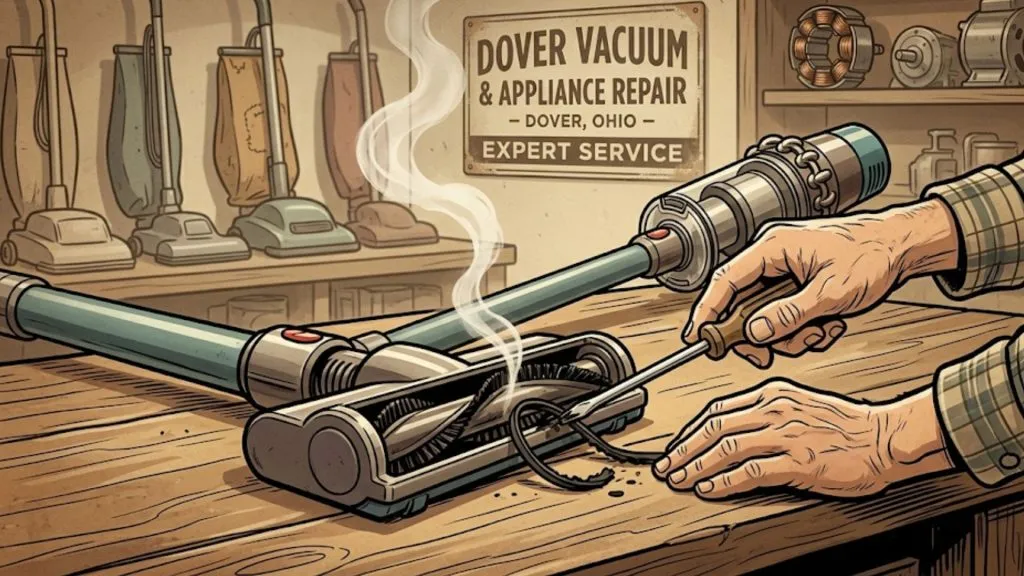
If a bearing failed after thirty years of daily use, a local repairman in Dover could simply unscrew the housing, pop a new bearing in, and the machine was ready for another three decades of service.
This commitment to repairability is why you still see 1970s Kirby models aggressively cleaning modern homes today. They are the ultimate testament to American engineering.
The Timeline: Vacuum Cleaner Construction Over Time
If vintage machines were so incredible, why did the industry stop making them?
To understand this, we have to look at how vacuum cleaner construction over time changed in response to global economics.
The 1960s: The Peak of Quality
During the 1950s and 60s, competition among brands like Hoover, Eureka, and Electrolux was fierce. They competed entirely on performance, durability, and features. These machines were heavy, expensive, and virtually indestructible.
The 1980s: The Plastic Revolution
In the 1980s, the introduction of advanced injection-molded plastics changed everything. Manufacturers realized they could mass-produce vacuum housings for pennies on the dollar compared to cast aluminum.
Initially, these plastics were very high quality (like heavy ABS plastic or Lexan). The machines became lighter, but they were still highly durable and screwed together for easy repair.
The 1990s to Today: The Disposable Era
By the late 1990s, the rise of the massive “big-box” retail stores shifted consumer expectations.
Homeowners no longer wanted to buy a vacuum at a specialized local dealer; they wanted to buy a cheap sweeper in the same aisle where they bought their groceries.
To hit these incredibly low price points, manufacturers moved production overseas. They stopped using heavy copper motors. They replaced metal fan blades with brittle plastic. Most devastatingly, they stopped using screws.
Modern disposable vacuums are glued or melted together. They are purposefully designed so that they cannot be opened or repaired by a mechanic. When they break, you are forced to throw them away and buy a new one.
John’s Vacuum Museum Insights
This transition from quality to disposability is something we witness every single day at our shop in T-County.
When you tour our facility, you are not just looking at old appliances. The John’s Vacuum Museum insights teach us profound lessons about sustainability and value.
We have over 200 meticulously restored antique sweepers in our collection. We have wooden pump vacuums from the 1910s. We have the iconic floating Hoover Constellations of the 1950s. We have the heavy-duty commercial Sanitaire units of the 1980s.
The “Screwdriver” Test
One of the most powerful lessons we teach our museum guests is what we call the “Screwdriver Test.”
We take a guest over to a beautiful, chrome-plated 1940s vacuum. With a single Phillips-head screwdriver, we can completely disassemble the entire machine in under five minutes. Every part is accessible. Every part is replaceable.
Then, we point to a broken, modern bagless vacuum sitting in our recycling bin. We explain that to get to the motor on that modern machine, we would have to literally break the plastic casing in half with a hammer, destroying the vacuum in the process.
The classic machines in our museum prove that appliances do not have to be disposable. They prove that true sustainability means building something so well that it never has to be thrown in a landfill.
Lessons from Appliance History
So, are old vacuums better than new ones?
In terms of raw, physical durability, the answer is a resounding, undeniable yes. A metal sweeper built in 1960 will outlast a plastic vacuum built in 2024 by several decades.
However, we also have to be realistic.
Those vintage machines lack modern HEPA filtration. They are often incredibly loud. They do not have the advanced, lightweight ergonomic designs that save our backs from aching after a long day of cleaning.
The ultimate lesson from appliance history is not that we should all go back to using 50-pound cast-iron sweepers.
We must stop accepting that a household appliance is only supposed to last two or three years. We must look for the hallmarks of classic quality—metal components, replaceable filters, and screw-together construction—in the modern machines we buy today.

Finding Long Lasting Vacuum Cleaners Today
Fortunately, you do not have to settle for cheap, disposable plastic.
There are still a few incredible manufacturers in the world who build machines the old-fashioned way. They use modern, lightweight materials, but they combine them with the “Built to Last” philosophy of the 1950s.
If you want to find genuinely long lasting vacuum cleaners today, you have to look past the big-box stores.
Here at John’s Sweeper Service, we specifically curate our showroom to feature brands that respect your investment:
- SEBO: Made in Germany, SEBO vacuums are the ultimate modern equivalent of a classic American tank. They use commercial-grade bypass motors, thick metal brush rolls, and incredibly tough ABS plastic. Most importantly, every single part on a SEBO can be unscrewed and replaced in minutes.
- Riccar: Riccar uprights still utilize massive metal bottom plates and aggressive, high-speed brush rolls. They provide the incredibly deep, carpet-beating agitation of a vintage machine, but with the modern convenience of S-Class HEPA filtration to keep your indoor air pristine.
- Miele: Miele canister vacuums are engineered for a 20-year lifespan. They test their hinges, cords, and motors to extreme limits, ensuring they can survive the daily abuse of a busy household.
When you invest in one of these premium brands, you are making the exact same financial decision your grandparents made fifty years ago. You are buying an appliance once, and expecting it to serve you for decades.
A Side-by-Side Comparison
To truly summarize what vintage vacuums teach us, let’s look at a direct, side-by-side comparison of the classic manufacturing philosophy versus the modern disposable trend.
| Feature | The Vintage Sweeper (1950s-1970s) | The Modern Big-Box Disposable (2020s) |
| Housing Material | Cast aluminum, spun steel, heavy chrome. | Thin, brittle, injection-molded plastic. |
| Motor Quality | Massive, heavy, hand-wound copper armatures. | Tiny, lightweight, machine-wound aluminum wire. |
| Suction Fan | Thick cast metal (shatters objects). | Thin, delicate plastic (shatters upon impact). |
| Assembly Method | Heavy-duty metal screws and bolts. | Chemical glues and ultrasonic plastic welds. |
| Repairability | 100% repairable by a local mechanic. | Impossible to open without destroying the unit. |
| Expected Lifespan | 30 to 50+ Years. | 18 Months to 3 Years. |
This table makes the contrast incredibly clear. The appliance industry did not forget how to make a durable machine; they simply chose to optimize for profit instead of longevity.
Visit John’s Sweeper Service in Dover!
The history of the vacuum cleaner is a fascinating window into American ingenuity and manufacturing.
We invite you to come experience this incredible history for yourself. Visit our storefront in downtown Dover, Ohio, and take a personal tour of John’s Vacuum Museum.
Come feel the weight of a solid metal 1940s Kirby. Admire the aerodynamic chrome of a 1950s Electrolux. See exactly what it means to build an appliance that was truly built to last.
While you are here, our expert team can help you apply these historical lessons to your modern cleaning needs. Whether you need a simple belt replacement for your current machine, or you are ready to finally invest in a premium, repairable vacuum that will serve your family for the next twenty years, we are here to help.
We provide honest advice, free repair estimates, and the kind of neighborly customer service that you simply cannot find on the internet.
Stop throwing your hard-earned money away on disposable plastic machines. Visit John’s Sweeper Service and Vintage Vacuum Museum today, and discover the true meaning of quality.
John’s Sweeper Service & Vintage Vacuum Museum
- Downtown Dover, OH
- Call: 330-343-4092
Related reading: From Bellows to Best-in-Class: The Evolution of America’s Favorite Sweepers