
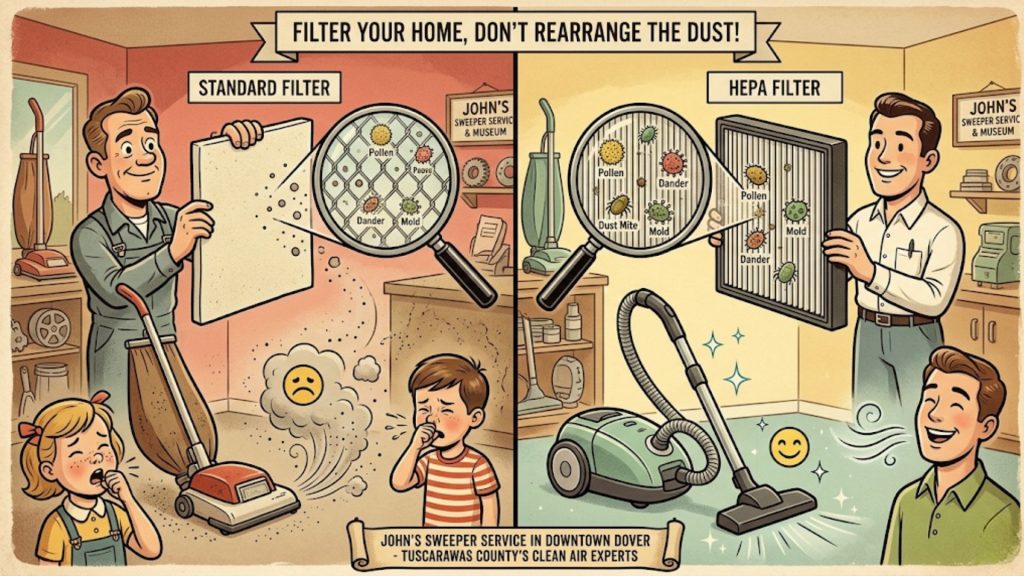
If you live here in Tuscarawas County, you know that keeping your home clean is a year-round battle. Between tracking in winter slush from the sidewalks of New Philadelphia, dealing with the heavy spring pollen blowing through Dover, and managing the everyday dust of an active family, your “sweeper” is the first line of defense.
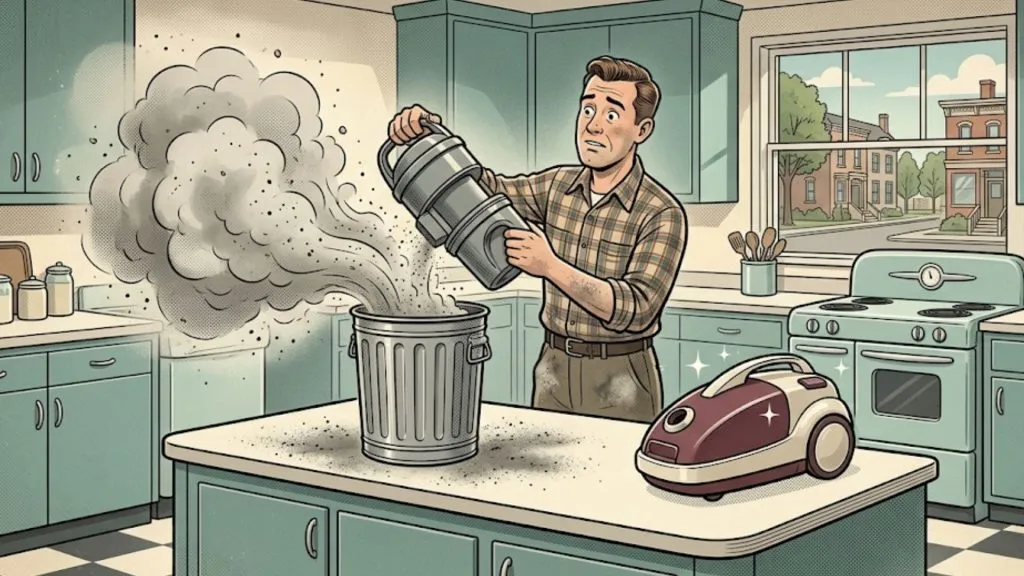
But there is a hidden problem lurking inside many of the vacuums we see brought into our shop: they are blowing the microscopic dirt right back into the air. At John’s Sweeper Service & Vintage Vacuum Museum, we constantly remind our neighbors that a vacuum’s job isn’t just to make the carpet look clean; it’s to actually remove the dirt from your home. The difference between a machine that purifies your air and one that acts like a “dust cannon” comes down to one crucial component: the filter. Let’s break down the difference between standard filters and HEPA filters so you can breathe a little easier.
The Basics: How Vacuum Filters Actually Work
To understand why filters matter, you have to look at how a sweeper breathes. A vacuum cleaner relies on a motor to pull in air, along with the dirt, hair, and crumbs on your floor. But all that air has to exhaust back out of the machine.
If the air simply passed through the dirt bag and out the back, millions of microscopic dust particles would be blown straight into your face. The filter acts as the gatekeeper. Its primary job is to trap dust, dirt, and allergens, preventing them from being recirculated. The quality of that filter dictates whether you are truly cleaning your home or just rearranging the dust.
Standard Filters: The Basic Barrier
Most of the cheap, “disposable” plastic vacuums you find at big-box stores come equipped with a standard filter. These are often made of simple foam or thin synthetic cloth.
- What They Do Well: Standard filters are perfectly fine at stopping the big stuff. If you suck up dog hair, pebbles, cheerios, or large dust bunnies, a standard filter will prevent those items from passing through the motor and back into your living room.
- Where They Fail: They are virtually useless against microscopic particles. Because the pores in the foam or thin paper are relatively large, fine dust, pollen, and pet dander pass right through them like sand through a chain-link fence.
The HEPA Advantage: A Truly Deep Clean
If you want hospital-grade clean air in your home, you need a HEPA filter. HEPA stands for High-Efficiency Particulate Air. To earn this official designation, a filter must be proven to trap a staggering 99.97% of airborne particles as small as 0.3 microns.
To put that in perspective, a human hair is about 50 to 70 microns thick. A HEPA filter easily captures the microscopic irritants that standard filters miss, including dust mite debris, mold spores, and ragweed pollen. According to the Environmental Protection Agency, HEPA filters are one of the most effective ways to remove harmful particulates from your indoor air.
The “Sealed System” Secret (Why Cheap Vacuums Fail)
Here is a closely guarded secret of the vacuum industry: A HEPA filter is completely useless if the vacuum body leaks. Many big-box brands slap a “HEPA” sticker on a cheap plastic vacuum to trick you into buying it. However, because those machines are built with thin plastic and cheap clips, the air simply bypasses the filter entirely, leaking out of the seams of the vacuum housing.
When you invest in “Buy It For Life” brands from our Dover showroom—like Miele, SEBO, or Riccar—you are getting a fully sealed system. These machines use heavy-duty rubber gaskets to ensure that 100% of the air pulled from your floor is forced through the HEPA filter before it leaves the machine.
Do I Need a HEPA Filter for My Home?
This is a question we hear daily at our shop. While any home will benefit from cleaner air, we strongly recommend upgrading to a HEPA filtration system if your household falls into any of these categories:
- Allergy and Asthma Sufferers: The Asthma and Allergy Foundation of America explicitly recommends HEPA filtration to control indoor allergens that trigger respiratory issues.
- Pet Owners: Dogs and cats produce microscopic dander that embeds itself in carpets and upholstery. A standard filter will just blow that dander back into the air, while a HEPA filter locks it away.
- Older Homes: Historic homes in towns like Strasburg or Sugarcreek are beautiful, but they often harbor more dust, plaster particles, and old allergens.
Maintenance: Don’t Choke Your Motor!
A dirty filter doesn’t just ruin your air quality; it destroys your vacuum cleaner.
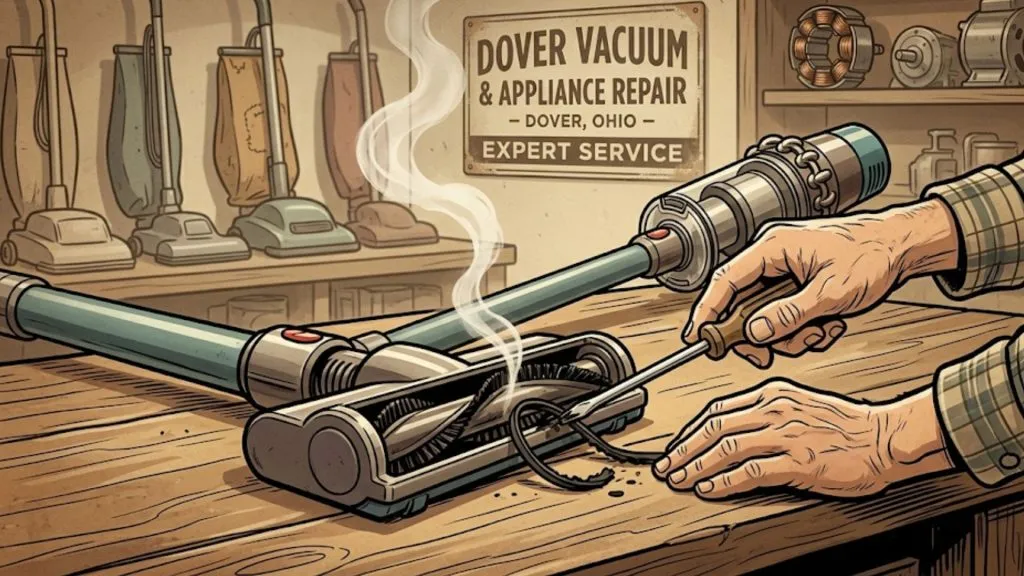
When a filter becomes clogged with dirt, it acts like a wall. The motor has to work twice as hard to pull air through the machine. This severe restriction in airflow causes the motor to run incredibly hot. Over time, this leads to the dreaded “burnt rubber” smell and, eventually, premature motor failure.
To improve your vacuum’s performance and save yourself a massive repair bill, follow these simple guidelines:
- Check for the Signs: If your machine has a noticeable decrease in suction, emits a dusty odor when you turn it on, or feels unusually hot to the touch, your filter is likely choked.
- Washing vs. Replacing: If you have a washable filter, you must let it air-dry completely (usually 24 to 48 hours) before reinstalling it. Putting a damp filter back into a dark vacuum is a guaranteed recipe for mold. For non-washable HEPA filters, they typically need to be replaced every 6 to 12 months depending on usage.
- Don’t Guess: If you aren’t sure which filter your machine takes, don’t buy a generic knock-off online that won’t seal properly. Bring your machine to our shop, and we will find the exact fit.
Your Local Expert for Tuscarawas County Vacuum Parts
Whether you need to upgrade your current machine to HEPA filtration, find a replacement standard filter, or you just have questions about why your sweeper isn’t pulling dirt like it used to, John’s Sweeper Service is here to help.
We are the premier local source for residential sweeper supplies, offering a massive inventory of genuine bags, belts, and filters that the chain stores simply don’t carry.
Why Visit John’s Sweeper Service?
- Expert Guidance: We will give you honest advice on whether your current machine is worth upgrading or if it’s time to invest in a machine that is actually built to last.
- Professional Repair: If a clogged filter has already caused your motor to overheat, our residential vacuum repair team can quickly assess the damage and provide a free, no-obligation estimate.
- The Museum Experience: After we get your vacuum running perfectly, take a fascinating trip through cleaning history in our one-of-a-kind Vintage Vacuum Museum located right inside our store!
Stop throwing money away on disposable plastic machines that pollute your indoor air. Visit John’s Sweeper Service in Downtown Dover today.
John’s Sweeper Service & Vintage Vacuum Museum Downtown Dover, OH Call: 330-343-4092 Free Estimates on All Repairs
Related reading: The Commercial HEPA Vacuum: Your Business’s Ultimate Air Quality Ally