

Upright vs. Canister Vacuums: Which is Right for Your Home?
Welcome! From all of us here at John’s Sweeper Service & Vintage Vacuum Museum in the heart of downtown Dover, we know a thing or two about vacuums. For decades, we’ve been helping folks all over Tuscarawas County find the perfect cleaning companion for their homes. A common question we get is, “Should I buy an upright or a canister vacuum?“
It’s a fantastic question. The answer isn’t about which one is universally “better,” but which one is perfectly suited for your home, your lifestyle, and your cleaning habits. Whether you’re in a historic multi-story home near the Reeves Museum or a modern ranch out past Tuscora Park, the right vacuum can make all the difference.
The Great Debate at a Glance
At first glance, the difference is obvious. An upright vacuum is a single, all-in-one unit that you push in front of you. A canister vacuum, on the other hand, consists of a separate canister body on wheels and a long cleaning hose with a wand. This fundamental design difference creates a cascade of pros and cons.
Here is a quick comparison table to get you started:
| Feature | Upright Vacuum | Canister Vacuum |
| Best For | Deep-cleaning large carpeted areas. | Hard floors, stairs, and above-floor cleaning. |
| Maneuverability | Excellent in open spaces; can be bulky in tight corners and under furniture. | Superb around furniture and in tight spaces; the canister can sometimes trail awkwardly. |
| Portability | Heavier and more cumbersome, especially on stairs. | Lighter to operate (wand only); canister must be carried or rolled up stairs separately. |
| Attachments | Good, but using the hose can sometimes be awkward and cause the unit to tip. | Excellent; the entire design is built around the versatile hose and wand system. |
| Storage | Easy to store; stands upright with a smaller footprint. | Bulkier due to the separate hose and canister, requiring more closet space. |
| Ideal Home | Single-level homes with wall-to-wall carpeting. | Multi-level homes with stairs and a mix of hard floors and carpets. |
Let’s break down these points further to help you make the best choice for your slice of Ohio.
Performance on Different Floor Types
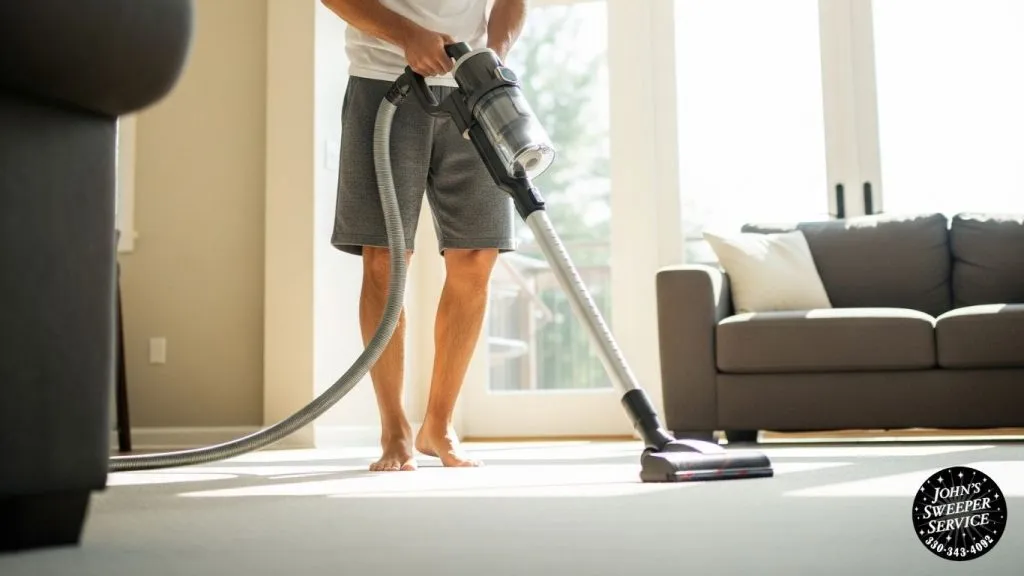
The biggest factor for most homeowners in Tuscarawas County is how well a vacuum cleans their specific floors. If your home is filled with plush, deep-pile carpeting, an upright vacuum is often the champion.
Upright Vacuums
The design of an upright puts the weight of the entire machine directly over the brush roll. This downward pressure, combined with a motorized brush, allows it to agitate carpet fibers more aggressively, pulling out deeply embedded dirt, dust, and pet hair. Imagine trying to clean up after a big family gathering—an upright’s wide cleaning path and powerful brushing action make quick work of large, carpeted living rooms. Many models also feature adjustable height settings, allowing you to optimize performance for different carpet thicknesses.
Canister Vacuums
Canisters can still be excellent on carpets, especially if you choose a model with a motorized powerhead attachment. This attachment mimics the action of an upright’s brush roll. However, because the head is lighter and not weighed down by the motor, it may not agitate the carpet quite as deeply as a heavy-duty upright. That said, for low-to-medium pile carpets and area rugs, a quality canister with a powerhead is more than sufficient.
Mastering Hard Floors
As more homes incorporate hardwood, laminate, and tile, especially in kitchens and entryways where you might track in mud after a hike at the Norma Johnson Center, hard floor performance is crucial. This is where canisters truly shine.
- Canister Vacuums: The magic of the canister vacuum on hard surfaces lies in its specialized tools. You can switch from a carpet powerhead to a dedicated hard floor brush with soft, natural bristles. This tool is designed to gently sweep and suction debris without the risk of scratching delicate finishes or scattering dirt, a common issue with the fast-spinning brushes on some uprights. The powerful suction, drawn directly through the hose, is fantastic for picking up fine dust from the cracks in hardwood or grout lines in tile.
- Upright Vacuums: Many modern uprights have improved their hard floor capabilities significantly. Most now include a brush roll “on/off” feature, which is essential. Turning the brush off prevents it from flinging debris around and protects your floors. However, the suction might be less direct, and the bulky head can sometimes struggle to capture debris along baseboards as effectively as a canister’s nimble floor tool.
Maneuverability and Portability
Think about the layout of your home. Do you have lots of tight corners, multiple levels, or furniture to navigate?
Navigating Stairs and Tight Spaces
- Canister Vacuums: This is a clear win for the canister. Cleaning a staircase with a heavy, bulky upright is awkward and often unsafe. With a canister, you can leave the main unit at the bottom or top of the stairs and carry only the lightweight wand and hose. This makes cleaning each step, as well as tight corners and under furniture, incredibly easy. Whether you’re dusting the intricate carvings at the Ernest Warther Museum or just the baseboards in your own home, the long hose and variety of attachments give you unparalleled reach and flexibility.
- Upright Vacuums: While some uprights now feature a “lift-away” design where a smaller pod can be detached, a traditional upright is cumbersome on stairs. You have to balance the entire machine on each step, which can be a real workout. Using the extension hose on an upright can also be problematic; stretching it too far can cause the vacuum to tip over.
Open-Floor Cleaning
- Upright Vacuums: For large, open areas of carpeting, the upright is a model of efficiency. Its all-in-one design and wide cleaning path allow you to move in long, straight lines, covering a lot of ground quickly and easily. There’s no canister to pull behind you that might bump into furniture or get caught on corners.
- Canister Vacuums: While canisters are easy to pull, they do trail behind you. In a cluttered room, you might find yourself frequently stopping to reposition the canister. It’s a trade-off: you gain nimbleness with the wand but lose the straightforward push-and-go simplicity of an upright in wide-open spaces.
Attachments, Filtration, and Storage
The Power of Attachments
Both types of vacuums come with essential tools like crevice tools, dusting brushes, and upholstery tools. However, using them is a different experience.
- Canister Vacuums: Attachments are a canister’s native language. The design is built around using the hose and wand, so swapping between the main floor head and a dusting brush to clean a lampshade is a seamless process. Many canisters come with a suite of integrated tools stored right on the unit.
- Upright Vacuums: Uprights have onboard attachments, but using them requires you to stop, switch the suction to the hose, and then manage the hose while the bulky machine stands nearby. As mentioned, this can sometimes lead to the vacuum tipping over if you stretch the hose too far.
Filtration and Allergies
For families dealing with allergies or asthma, filtration is a non-negotiable feature. The goal is to trap dust and allergens, not kick them back into the air.
Both high-quality uprights and canisters offer options with sealed systems and HEPA (High-Efficiency Particulate Air) filters. According to the U.S. Environmental Protection Agency, a HEPA filter can remove at least 99.97% of dust, pollen, mold, bacteria, and any airborne particles with a size of 0.3 microns.
The key isn’t the style of the vacuum, but whether it has a fully sealed system. A sealed system ensures that all the air sucked into the vacuum passes through the filter before being exhausted. Many premium brands, which we carry here at John’s, excel in this area for both canister and upright models.
Storing Your Machine
- Upright Vacuums: Uprights are the clear winner for easy storage. They stand up on their own and have a relatively small footprint, making them easy to tuck away in a closet.
- Canister Vacuums: Canisters are a bit more awkward. You have the main unit plus a long, bulky hose and wand to store. While manufacturers have gotten better at creating systems to wrap the hose, they generally take up more closet space.
Making the Right Choice for Your Home
- Choose an Upright if: You have a home with mostly carpeting, especially medium-to-high pile. You have large, open rooms and value cleaning speed and efficiency. Storage space is a premium, and your home is mostly on one level.
- Choose a Canister if: Your home has a lot of hard floors, stairs, or a mix of flooring types. You need maximum versatility for cleaning everything from floors to ceilings, drapes, and upholstery. You have a lot of furniture to clean around and under, and don’t mind a slightly more involved storage solution.
As noted by the experts at Good Housekeeping, the final decision rests on your home’s layout and your personal preferences.
Frequently Asked Questions
Are upright vacuums better for pet hair in Tuscarawas County homes?
For homes with pets and lots of carpeting, an upright vacuum often has the edge. The motorized brush roll is excellent at agitating carpet fibers to lift stubborn pet hair. However, a canister vacuum with a motorized powerhead attachment is also a powerful contender. For cleaning pet hair off upholstery, stairs, and out of tight corners, a canister’s lightweight wand and specialized attachments can be more effective and easier to handle.
What is the best vacuum for multi-level homes with stairs in Dover, OH?
For multi-level homes, a canister vacuum is typically the superior choice. Its design allows you to carry the lightweight wand and hose up and down stairs easily while the main canister unit rests on a step. This is far safer and less strenuous than trying to balance a heavy, cumbersome upright on each stair. The long hose also provides excellent reach for cleaning landings and high-up cobwebs.
I have allergies. Is a bagged or bagless vacuum better for air quality?
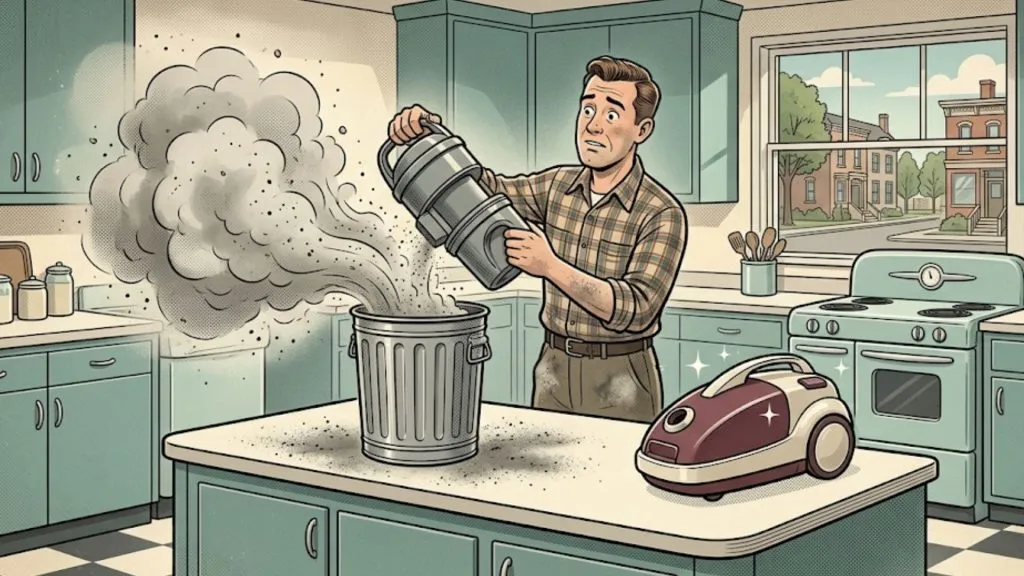
Both bagged and bagless systems can offer excellent filtration, but for allergy sufferers, a high-quality bagged vacuum with a HEPA filter is often recommended. When you empty a bagless canister, you risk releasing a cloud of dust and allergens back into the air. A self-sealing bagged system allows you to dispose of the entire bag—and all the trapped debris—without any direct exposure, ensuring a cleaner and healthier process.
Still Undecided? Let the Experts Help!
The best way to truly know which vacuum is right for you is to try them out. Here at John’s Sweeper Service & Vintage Vacuum Museum in downtown Dover, we invite you to come in and get a feel for both upright and canister models. We can walk you through the features of top brands and provide expert advice tailored to your specific needs. And while you’re here, take a stroll through our museum and see how cleaning technology has evolved over the last century!
Stop by our store on West 3rd Street, call us for expert advice, or explore our services online. We’re here to keep Tuscarawas County clean, one home at a time!
Related reading: Robot Vacuums vs. Traditional: Which is Best for You?