
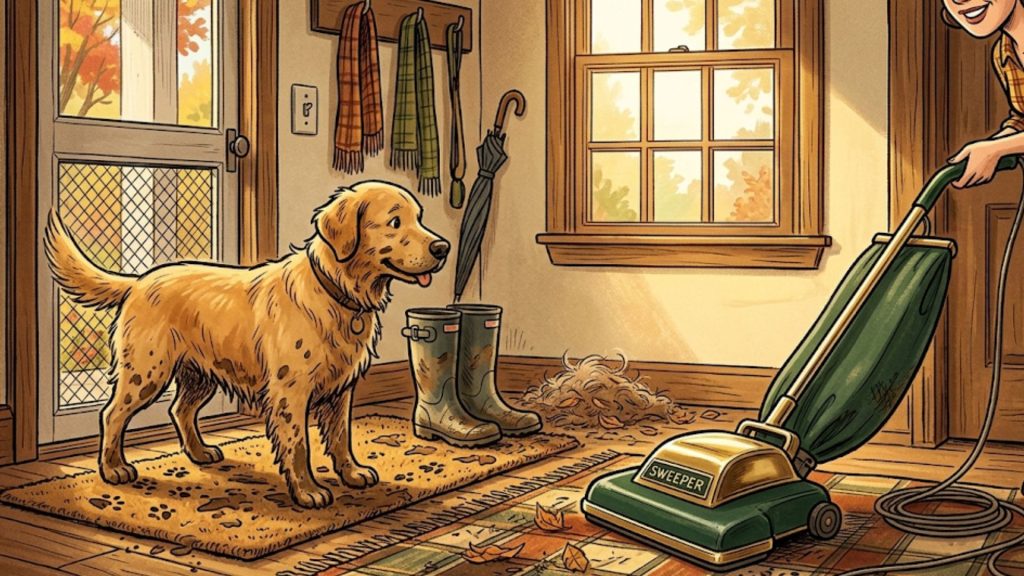
If you share your home in Dover, New Philadelphia, or Sugarcreek with a four-legged friend, you know that the calendar doesn’t just dictate the weather—it dictates the state of your carpets.
In Ohio, our seasons are distinct and demanding. From the heavy spring rains that turn our yards into mud pits to the bone-dry dust of summer and the abrasive road salt of winter, each season brings a new type of “debris” into your living room. When these outdoor elements combine with the year-round challenge of pet hair, your vacuum cleaner faces its toughest test.
At John’s Sweeper Service, we believe that understanding the changing seasons is the secret to protecting your flooring investment. Today, we are exploring how different times of year affect your carpets, the best vacuum for golden retriever hair, and how to manage the unique debris that hitches a ride on your pet’s paws.
The Seasonal Shedding Cycle: Why It Hits So Hard
To manage pet hair effectively, you have to understand the biological “clock” your pet is following. Most heavy shedders, like German Shepherds and Golden Retrievers, follow a seasonal rhythm known as “blowing coat.”
The Spring “Blow-Out”
As the days get longer and the Dover sun begins to warm up, your pet’s body realizes it no longer needs that thick, insulating winter undercoat. This results in a massive release of fine, soft fur. This undercoat is what clogs most big-box store vacuums because the hairs are so fine they bypass the primary brush roll and head straight for the motor filters.
The Autumn Preparation
In the fall, the process reverses. Your pet sheds their lighter summer coat to make room for the dense winter layers. While the volume might seem slightly less than in the spring, this hair is often “stickier” due to the natural sebum oils pets produce to waterproof their coats for the coming snow.
According to the ASPCA, these seasonal shifts are natural, but for a homeowner, they mean a 300% increase in the volume of material entering your vacuum’s bag or bin.
Debris Deep-Dive: How the Seasons Attack Your Carpet
Pet hair is only half the battle. The real damage to your carpets occurs when hair combines with seasonal debris to create an abrasive “sandpaper effect” at the base of your carpet fibers.
1. Spring Mud and Micro-Silica
When your dog tracks in Ohio mud, that moisture carries fine silica particles deep into the carpet backing. As the mud dries, the pet hair “webs” around these particles, locking them into the fibers. If you don’t use a vacuum with high-speed agitation, those silica particles will stay at the base of your carpet, cutting the fibers every time you walk across the room.
2. Summer Dust and Pollen
During the dry months in Sugarcreek, the primary debris is microscopic. Pollen, fine dust, and dried grass clippings are easily trapped in pet fur. This requires a machine with elite pet dander vacuum filtration to ensure you aren’t just moving the allergens from the floor into the air you breathe.
3. Winter Salt and Brine
This is the most dangerous debris for Dover homeowners. The salt and brine used on our local roads are chemically abrasive. When salt is tracked onto a carpet and then covered by a layer of winter pet shedding, it creates a “crust” that can permanently disfigure carpet fibers. You need a heavy-duty vacuum for pets that can break this crust apart and lift the heavy salt crystals.
Finding the Best Vacuum for Golden Retriever Hair
When customers come into our Dover showroom asking for the best vacuum for golden retriever hair, we look for three non-negotiable features: high CFM (Cubic Feet per Minute), aggressive agitation, and massive capacity.
The Agitation Requirement
A Golden Retriever’s hair doesn’t just sit on top of the carpet; it weaves itself into the pile, especially when weighed down by seasonal mud or salt. To remove it, you need a vacuum with a high-speed, stiff-bristled vacuum brush roll for pets.
While many cheap vacuums use soft plastic bristles, premium brands like Riccar and SEBO use dense, high-torque brush rolls that physically vibrate the carpet. This vibration breaks the static bond and lifts the hair and heavy seasonal grit into the air stream.
The “Bypass” Motor Advantage
In a heavy-shedding home during a seasonal transition, you are sucking up massive volumes of hair and abrasive debris. In a standard vacuum, this material passes directly through the motor fan. If you suck up a heavy salt crystal or a small pebble, the fan can shatter.
We recommend “Bypass” motors, where the suction air is kept separate from the cooling air of the motor. This industrial design, often found in the commercial vacuums we sell for residential use, ensures your machine survives years of heavy shedding and seasonal grit.
Vacuuming Pet Hair on Hardwood and LVP
For our neighbors in the Dover historic district with beautiful original hardwoods, or those in New Phila who have recently upgraded to Luxury Vinyl Plank (LVP), the challenge is different.
Seasonal debris like sand and salt can act like sandpaper on your hard floors. A standard upright with a spinning brush roll can actually flick this grit against the finish, causing permanent scratches.
For these surfaces, we recommend a high-airflow canister vacuum equipped with a “Parquet” or specialized floor tool. These tools use soft, natural bristles (like horsehair) to gently sweep the floor while the high suction pulls the hair and grit into the bag. This is the only safe way to manage vacuum for pet hair on hardwood during the gritty winter months.
How to Remove Pet Hair from Carpet: The Seasonal Technique
Even with a great vacuum, your technique must change with the seasons. When dealing with deep-seated hair and spring mud in a New Philadelphia family room, we recommend the “Cross-Hatch” method.
- The Slow Pass: In the spring, move the vacuum 50% slower than you usually do. This gives the brush roll time to “vibrate” the heavy mud and hair out of the pile.
- The Cross-Hatch: Vacuum the room in North-South rows, then turn 90 degrees and vacuum East-West. This opens the “weave” of the carpet from both angles, ensuring no seasonal grit is left at the base.
According to the Carpet and Rug Institute (CRI), this multi-directional approach is the only way to truly remove abrasive grit and deep-seated pet dander.
Pet Dander Vacuum Filtration: Why HEPA is Non-Negotiable
As the seasons change, so do the allergens. Spring brings pollen; winter brings stagnant indoor air filled with dander.
Standard vacuum filters have pores that are much larger than a dander particle. If you use a cheap vacuum, you are effectively sucking up the hair but blowing the dander and pollen directly back into your home’s air.
To protect your family, you need pet dander vacuum filtration that meets HEPA (High-Efficiency Particulate Air) standards. A true HEPA filter must capture 99.97% of particles down to 0.3 microns.
However, a filter is only as good as the machine’s seal. We advocate for “Sealed Systems,” like those found in Miele and SEBO canisters. These machines use rubber gaskets to ensure that 100% of the air is forced through the HEPA filter, ensuring that the air coming out of your vacuum is cleaner than the air in the room. This is the cornerstone of a healthy pet odor vacuum guide.
Understanding the “Seasonal Pet Odor” Connection
“Why does my vacuum smell like a wet dog more in the spring?”
The answer is moisture. When you vacuum up damp pet hair or mud, you are introducing water into the warm, dark environment of your vacuum’s bag or bin. This creates a petri dish for bacteria.
Bagged vs. Bagless for Seasonal Care
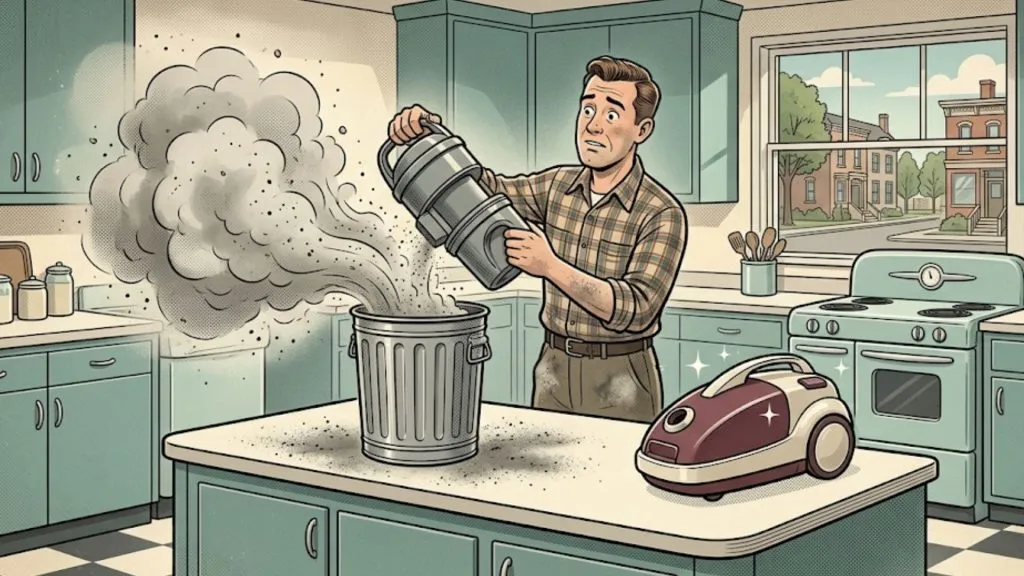
This is where the hidden cost of bagless vacuums becomes very clear. In a bagless machine, damp seasonal odors coat the plastic cyclone walls. Every time you turn the machine on, you are blowing air over those rancid oils.
In a high-quality bagged vacuum, the hair and mud are sealed inside a multi-layer charcoal-lined bag. When the season changes and the smell starts to linger, you simply throw the bag away. The smell goes out to the trash, not back into your Dover living room.
The Evidence of a Seasonally-Stressed Vacuum
How do you know if the changing seasons are winning the war against your current sweeper? Your machine will give you “evidence” that it’s failing to keep up with the new debris.
| The Evidence | What It Means | Your Next Step |
| “Gritty” Sound in the Head | Road salt or sand has entered the brush roll bearings. | Stop immediately. Deep clean the brush roll or bring it for service. |
| High-Pitched Whistling | Spring pollen and fine dander have completely choked your HEPA filter. | Replace your HEPA or S-Class filters immediately. |
| Loss of Suction on Rugs | The machine can’t pull air through the mud-clumped fibers. | Check for a hose clog or change the bag. |
| Static Shocks in Winter | The dry winter air and salt are creating massive static buildup. | Use a machine with a grounded cord and check for airflow clogs. |
| The “Musty” Closet Smell | Your vacuum is holding onto damp spring hair and moisture. | Use a fresh synthetic vacuum bag and clean the housing. |
When the Season Wins: The Rental Vacuum Solution
Sometimes, the transition is too much—especially after a particularly muddy spring or a salt-heavy winter. If your carpets have become deeply saturated with grit, mud, and hair, a standard vacuuming might not be enough to save the fibers.
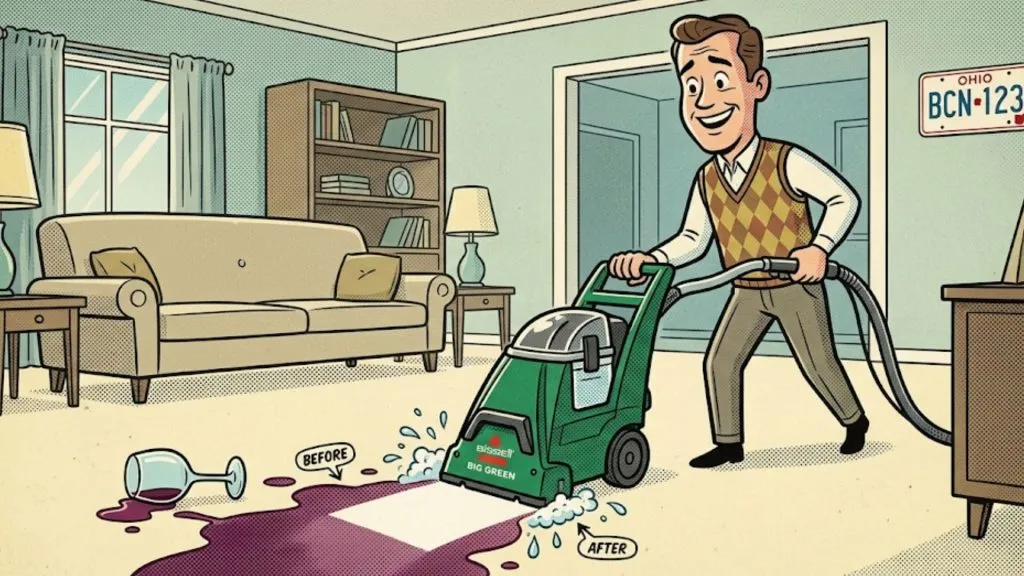
This is when we recommend a rental vacuum deep clean. Our Bissell Big Green commercial extractor is specifically designed to pull “wicking” mud and deep-seated salt from the carpet padding.
When you use our rental with a specialized pet enzyme cleaner, you aren’t just removing the hair; you are chemically neutralizing the sebum oils and dissolving the salt crystals. It’s the perfect way to “reset” your home for the new season.
Historical Perspective: How Ohio Cleaned Before Modern Tech
Before we had the high-tech SEBOs and Riccars of today, families in Dover and New Phila managed the changing seasons with brute force.
In the early 1900s, “Spring Cleaning” meant taking every rug in the house outside. If a farm dog in Bolivar spent the winter on the parlor rug, that rug had to be beaten for hours to remove the winter soot and hair. You can see these original wire rug beaters and the very first “suction sweepers” right here in our Vintage Vacuum Museum.
Seeing those early machines is a great reminder that while the seasons haven’t changed, our ability to handle them has. Modern technology hasn’t just made cleaning easier; it has fundamentally protected our homes from the abrasive nature of the outdoor world.
Choosing the Right Brand for Your Home’s Season
We’ve tested every major brand on the market. If you are serious about managing pet hair and seasonal debris, these are the brands we trust at John’s Sweeper Service:
- SEBO (The German Workhorse): Their “Felix” and “X7” models feature an easy-to-remove brush roll (no tools required!), which is essential for removing the hair and grit that accumulates during shedding season.
- Riccar (The American Powerhouse): Their “Tandem Air” technology uses two motors to create a “suction sandwich” that pulls heavy salt and mud out of the thickest carpets.
- Miele (The Allergy King): Their “Cat & Dog” series includes specialized charcoal filters to neutralize the “wet dog” smell that comes with spring rains.
Why Your Local Vacuum Shop is Your Best Ally
You can buy a “Pet Pro” vacuum at a big-box store, but that box won’t tell you how to clean salt out of your bearings or how to manage the spring blow-out.
When you work with a local expert in Dover, you get:
- Seasonal Advice: We’ll tell you exactly when to change your filters based on the local pollen counts and weather patterns.
- Genuine Supplies: We stock the specific bags and filters that ensure your machine survives the “sandpaper effect” of seasonal grit.
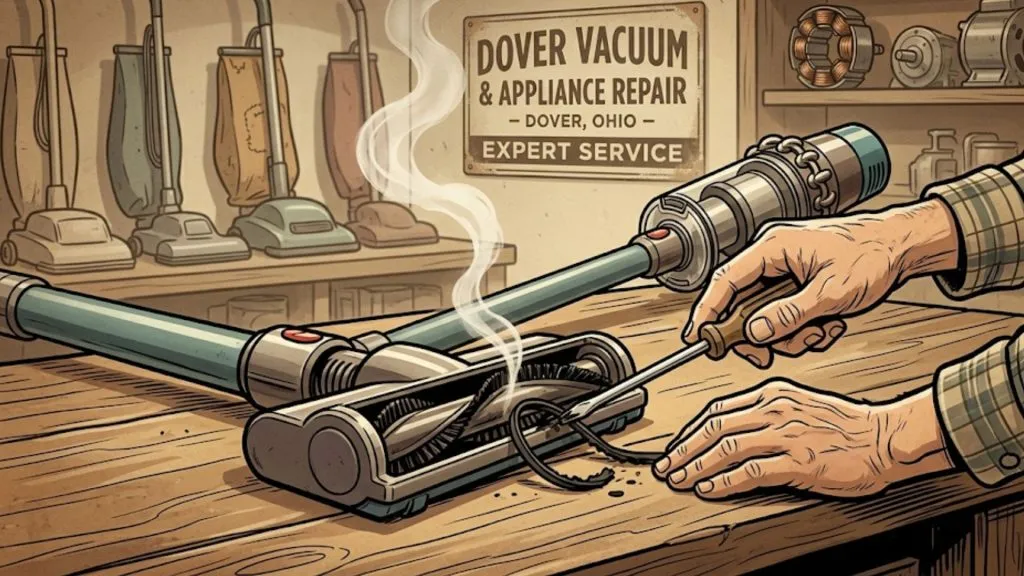
- Expert Repair: If the winter salt eventually seized your brush roll, our residential repair service can get you back up and running, often the same day.
The Asthma and Allergy Foundation of America (AAFA) reminds us that controlling pollutants at the source—the floor—is the most effective way to manage indoor health as the seasons shift.
Stop by John’s Sweeper Service in Downtown Dover today. Let us help you choose the right tools to battle the changing seasons and keep your home “pet hair free” year-round.
Related reading: Conquer Clutter, Start Spring Cleaning! | What Is The Average Life Of A Vacuum Cleaner?